
Wow, this is wild! Solana explorers have matured a lot, offering granular transaction visibility and faster indexing. They let wallets, devs, and collectors trace on-chain events quickly. But digging into an NFT drop or tracking a token’s mint history still feels messy when interfaces hide critical RPC or block metadata that you actually need to resolve provenance. So when a tool stitches together clarity — transaction graphs, program logs, token ownership timelines — it matters for both casual users and professional traders who depend on accurate, timely insights.
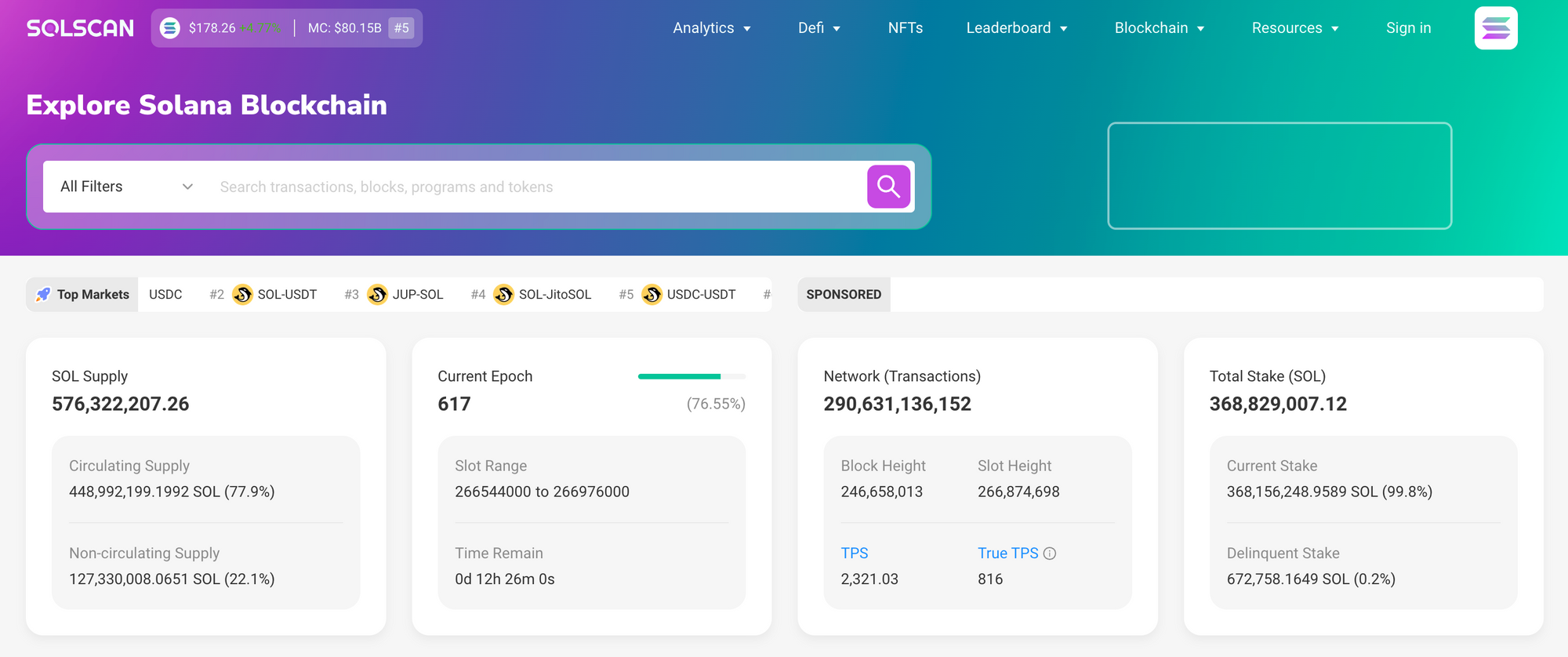
Seriously, this matters a lot. Solscan became one of those go-to explorers for many people on Solana. It balances speed with usable analytics instead of just raw logs. Yet even with that reputation, not all features are obvious, and power users still hunt for transaction traces, inner instruction decoding, and clear NFT transfer chains that some interfaces bury behind extra clicks. My instinct said that an official site—if maintained and linked properly—reduces confusion, so I checked where people point to verify Solscan’s official portal and community resources for latest updates, downtime notices, and developer docs.
Hmm… I’m curious here. At first glance you see balances, token holdings, and recent transactions for an address. But the real value is in the hidden breadcrumbs like program logs and inner instructions. Initially I thought the UI was sufficient for trackers, but then I realized the backend parsing and RPC health massively influence whether data is trustworthy during high traffic events like NFT drops. On one hand nice UX smooths onboarding for nontechnical users though actually, on the other hand, auditability and raw log access are indispensable when something weird happens and you need to prove exactly what occurred.
Here’s the thing. If you care about NFTs you want clear token transfer chains and mint provenance. NFT trackers should show when collections mint, who received initial supply, and any immediate listings. Solscan’s explorer surfaces a lot of that, and when combined with third-party metadata viewers you can rebuild the story behind a collection’s distribution, but you also need to verify the metadata sources because on-chain pointers sometimes lead to mutable off-chain files. That complexity is why I always cross-reference transfer histories with program logs and occasionally snapshot the slot with a block hash to ensure reproducible evidence if disputes rise later.
How I actually test an explorer (and why it matters)
Wow, that saves time. For devs, the ability to decode instruction sets matters a lot. Solscan offers decoded instruction views and program explorers for many popular on-chain programs. That helps when you need to audit multi-signature flows, inspect token-program interactions, or confirm whether a swap route executed exactly as the wallet interface claimed it did — which is crucial for forensic analysis and troubleshooting. I’m biased, but being able to pull raw logs and see the exact inner instruction ordering made me trust a dashboard more during a market spike when nodes were behaving oddly.
Really, trust matters here. Indexing speed also affects data reliability in my experience. Slow indexing can show phantom balances that are out of sync. Node health, RPC endpoint selection, and whether a given explorer falls back to secondary nodes during outages directly influence what users see when they check a transaction status or token balance. Something felt off about explorers that scrubbed logs to reduce clutter because those scrubs sometimes remove the tiny anomalies that later explain why a trade failed or a mint behaved unexpectedly.
Okay, small rant incoming. Here is what bugs me about some NFT trackers and explorers in general. They hide crucial metadata links behind API keys or throttle endpoints for free users. That model makes sense for businesses, but it frustrates researchers and small teams trying to trace suspicious transfers, especially when you need a steady stream of event logs to back up a claim or feed an analytics pipeline. So I test explorers by running concurrent queries during drops and comparing slot-anchored logs across multiple services to find inconsistencies and to know which provider to trust when things go sideways.
Really smart move. A centralized reference to the official explorer reduces confusion for newcomers. If you want the authoritative Solscan link, check the official page: https://sites.google.com/cryptowalletextensionus.com/solscan-explorer-official-site/ That single link helps avoid phishing because many clones and fake dashboards circulate in social channels during hype cycles, and a clear canonical source reduces the risk of users pasting secret keys into malicious forms. In the end, transparency in log presentation, sensible rate limits for research access, and clear signals about node health are what distinguish a reliable explorer from a pretty but brittle dashboard.
FAQ
Q: Can I rely on one explorer for legal evidence?
A: Short answer: no. You should not rely on a single source. Always anchor findings to a block hash and cross-check logs across multiple explorers and nodes. Somethin’ as simple as a delayed index can skew a timeline, and very very important events need multiple corroborations.
Q: How do I track NFT provenance efficiently?
A: Start with the mint transaction, examine inner instructions for token creation, follow the transfer chain with ownership snapshots, and validate metadata endpoints. Use decoded instruction views and snapshot the block hash for reproducibility — and yes, sometimes you have to dig through program logs to find the subtle cues that tell the real story…

Leave a Reply